Biology
Effect Of Temperature On Enzyme Activity
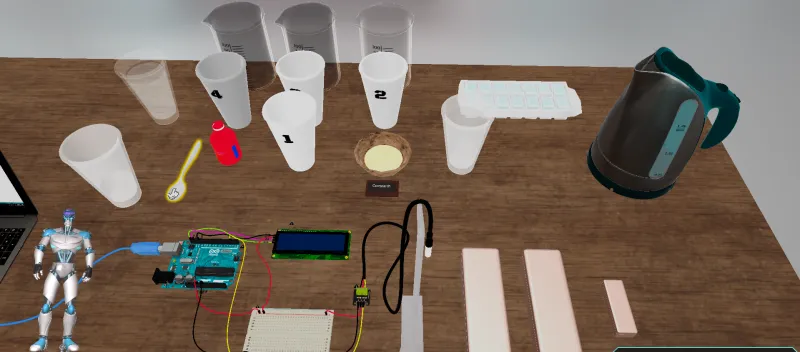
This experiment is to demonstrate how the activity of enzymes changes with the change of temperature.
Mission
This experiment is to demonstrate how the activity of enzymes changes with the change of temperature.
Curriculum Alignment
| Standard | Syllabus code | Topic | Coverage | Grades | |
|---|---|---|---|---|---|
| NGSS | No dedicated NGSS PE for enzyme-temperature kinetics | Weak | 9–12 | ||
| British / IGCSE | CAIE 0610 5.1.5 / Edexcel 4BI1 2.12 | Effect of temperature on enzyme activity | Partial | 9–10 | |
| IB | 2.5 Enzymes | Experimental investigation of a factor affecting enzyme activity (Practical 3) | Full | 11–12 | |
| CBSE | Class 11 Ch.9 Biomolecules | Enzyme -- types, properties, enzyme action | Partial | 11–11 | |
| AERO / AP | AP Bio 3.2 Environmental Impacts on Enzyme Function | Environmental factors (temperature, pH, substrate concentration, inhibitors) affect enzyme activity | Partial | 9–12 |
Variables
What you change
- Temperature
What you measure
- Efficiency of enzymes’ function (presence of starch)
What you keep constant
- Humidity
- Volume and concentration of sugar solution
- Air quality
What You'll Need
- Breadboard 400 Tie Point
- Arduino Uno
- I2C LCD
- Waterproof Temperature Sensor (Stainless Steel Probe)
Estimated Time
Virtual mode 14 minTest mode 21 minExercise mode 19 min
Mind-Blowing Fact
Defend the body!
The green color of mucus is caused by the enzyme that white blood cells produce to create hypochlorite, a corrosive chemical that is effective in dissolving bacteria. Hypochlorite is the same chemical that is used in household bleach. This enzyme is one of the key mechanisms that our body uses to defend itself against harmful microorganisms.
How You Can Run It
Virtual modeTest modeExercise modeView-only modeAccessibility modeTobii eye trackingVoice commandsArduino integrationAmericanBritishIB